Why Power Module Lifetime Depends on Interconnection Design
Power modules for automotive and other high-performance applications are exposed to demanding operating profiles. Reliability targets can include up to one million power cycles, more than 15 years of lifetime and operating temperatures from -40°C to 175-200°C. These requirements place significant stress on every material interface inside the module.
One of the main drivers is Coefficient of Thermal Expansion (CTE) mismatch. Power modules combine materials such as semiconductors, copper, ceramics, die attach layers, substrate attach layers and encapsulants. During power cycling, these materials expand and contract at different rates. The resulting mechanical stress is concentrated at interfaces such as the die attach, substrate attach, encapsulation and top-side connection.
For future power electronics, this makes the die top connection more than an electrical pathway. It must also remain mechanically robust over thousands of thermal cycles and hundreds of thousands of power cycles over the intended lifetime of the module.
Study Setup: Three Die Top Connection Solutions Compared
To evaluate this challenge, Heraeus Electronics compared different die top connection solutions in cooperation with HAW Kiel. The study covered sample production, electro-thermal simulation, current carrying capability measurements, power cycling test, and Scanning Electron Microscope (SEM) analysis after power cycling.
The comparison focused on three solutions:
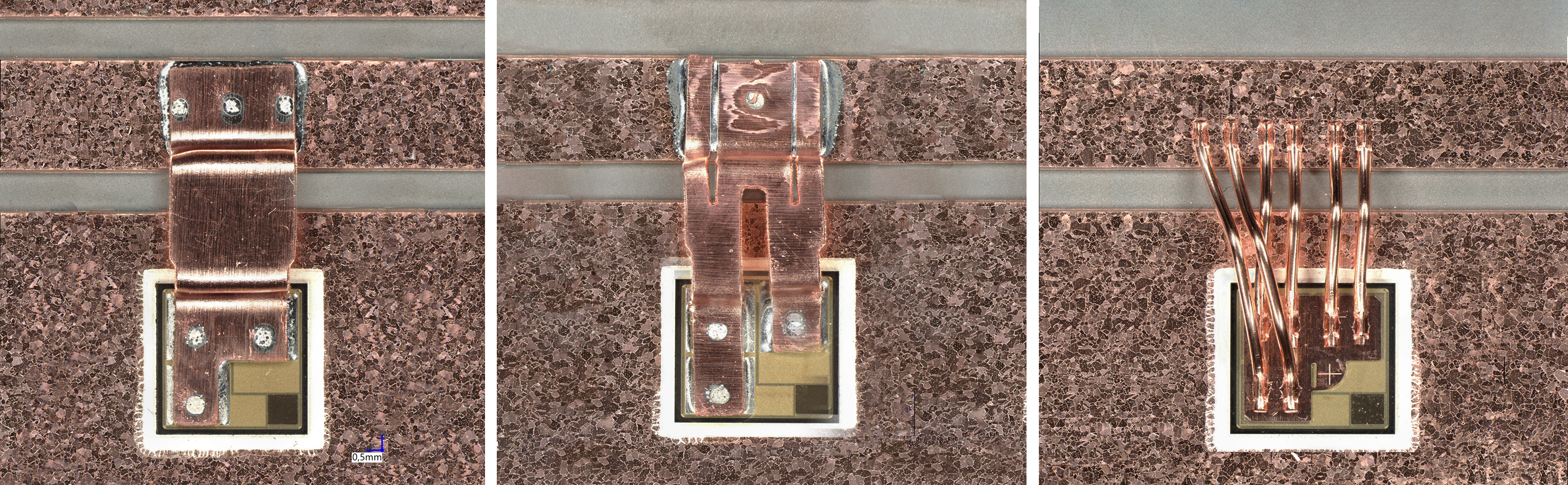
- Clip Standard: A SiC die was sintered using mAgic® PE340 sinter paste onto an AMB ceramic substrate. The clip was soldered with Microbond SMT645 solder paste, with a reflowed solder thickness of 60 µm and a clip thickness of 200 µm.
- Clip Stress Relief: This design used the same basic material concept, with a SiC die sintered using mAgic® PE340 and a clip soldered with Microbond SMT645. The clip geometry was adapted to reduce mechanical stress compared with the standard clip design.
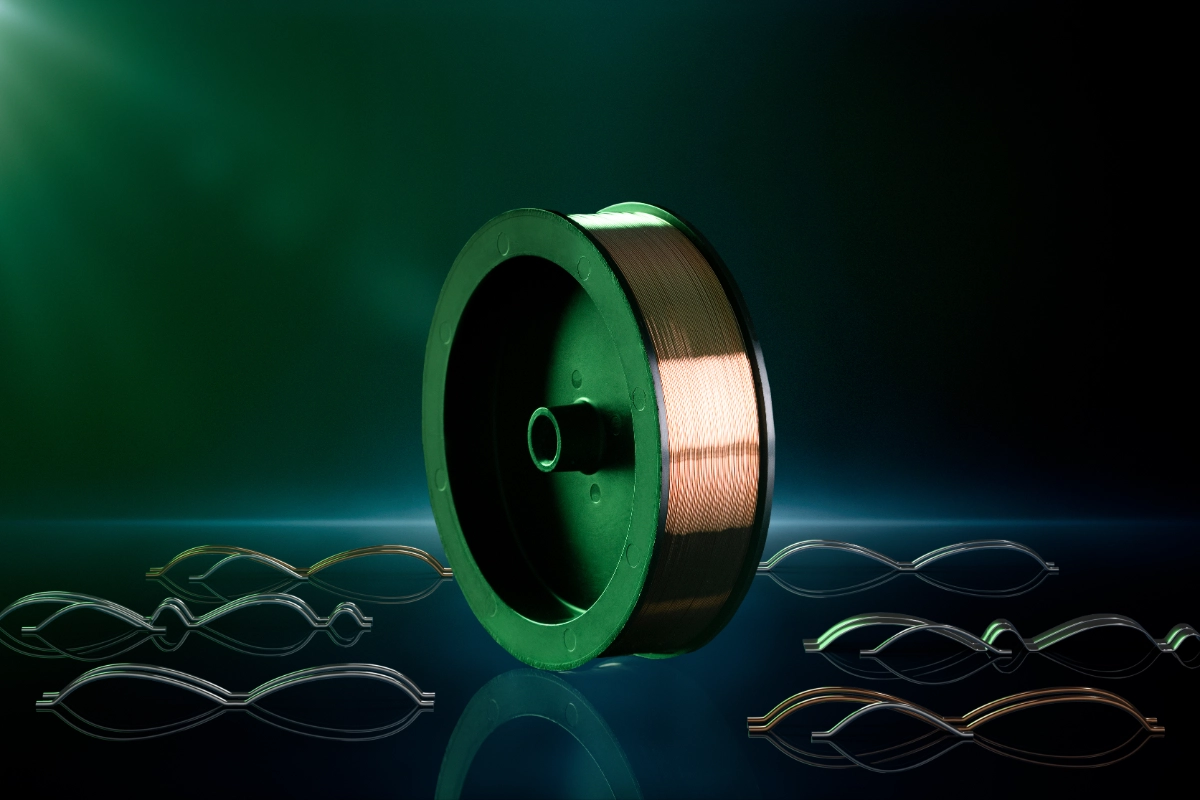
- Die Top System (DTS®): The DTS® setup used one-step sintering of the die, DTS® and base plate. The SiC die was sintered using mAgic® PE340, with a 20 µm sinter layer and six 400 µm copper wires. The DTS® was sintered with a paste specially developed for this system.
All three samples were designed with similar cross sections to enable comparable current carrying capability.
Current Carrying Capability: A Comparable Starting Point
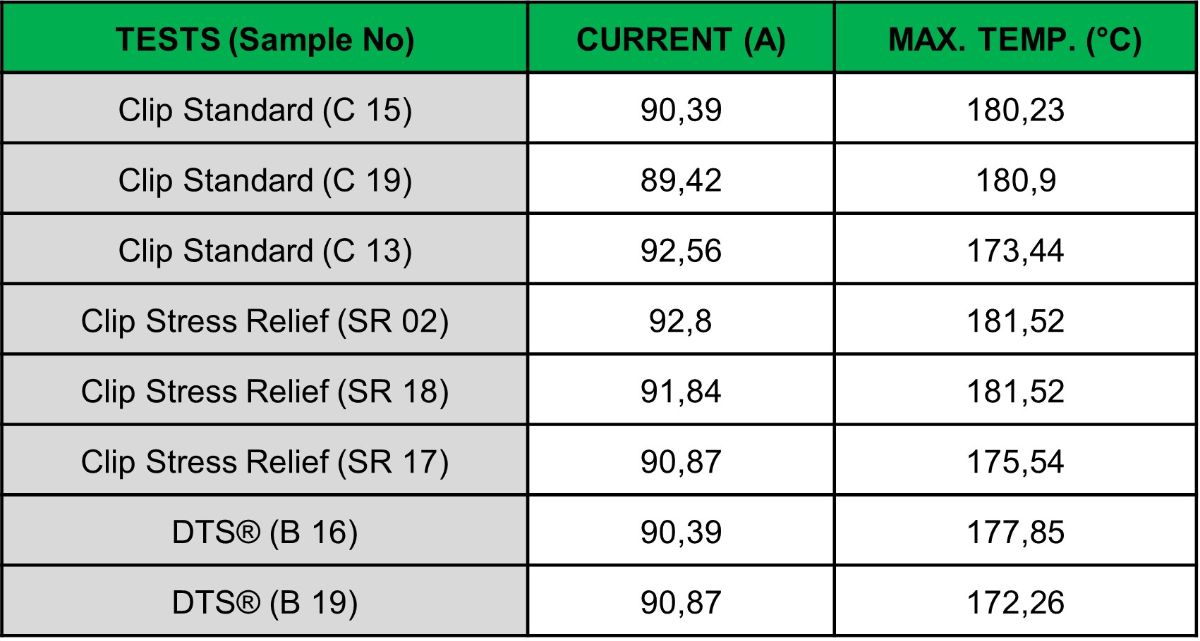
The measurements showed that all three technologies demonstrated comparable current carrying capability and no significant difference in the maximum temperature of the semiconductor. Under the tested conditions, the clip-based solutions and DTS® were therefore able to carry current in a similar range without creating a thermal disadvantage at chip level.
Thermal simulation confirmed the measurement results. At the same power level, Clip Standard, Clip Stress Relief and DTS® showed very similar maximum temperatures and temperature distributions. The top connection temperature was lower than the chip temperature for all three technologies, and no significant ohmic heating of the clip or bonding wires was observed up to 90 A.
This result narrows the technical discussion. If current carrying capability and thermal behavior are similar, the decisive question becomes which technology can withstand repeated thermo-mechanical stress for longer.
Power Cycling: The Lifetime Advantage Becomes Visible
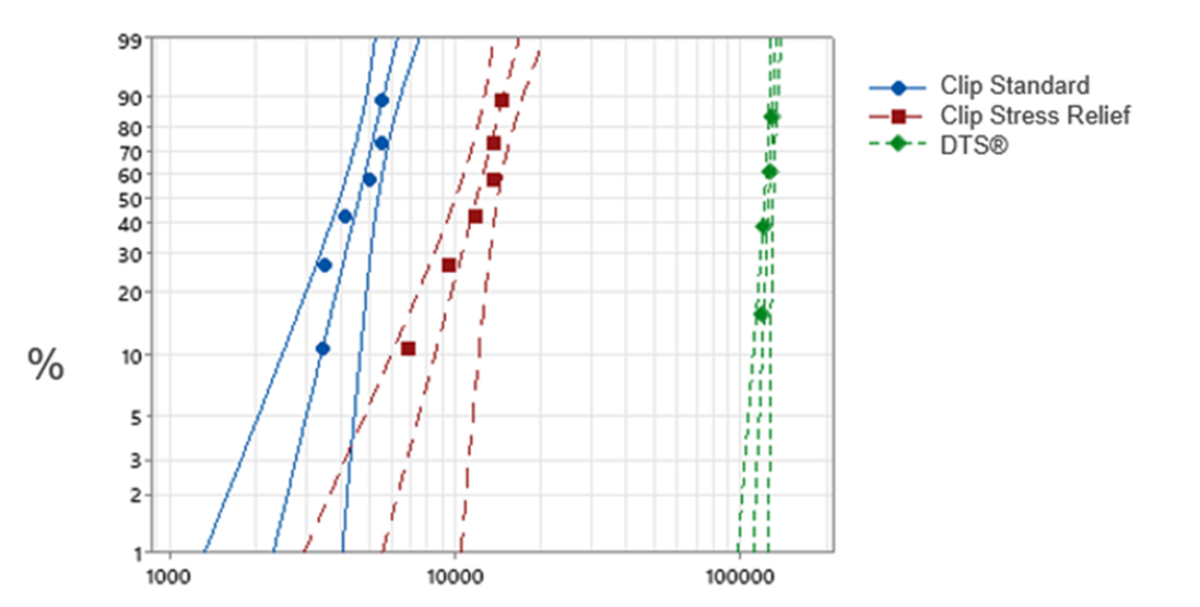
The power cycling test was performed with Tmax = 160°C, Tmin = 40°C, dT = 120 K and ton/toff = 2 sec./4 sec. Under these conditions, the different technologies showed clearly different lifetime behavior:
- The standard clip showed the lowest lifetime, with an average of about 4,500 cycles.
- The stress-relief clip improved the result to around 9,000 cycles, approximately doubling the lifetime compared with the standard clip.
- DTS® reached 100,000 cycles, showing about ten times longer lifetime than the clip-based solutions in this comparative test.
The performance gap does not come from better current carrying capability or lower maximum chip temperature. It comes from the way the top-side connection handles mechanical stress during repeated power cycling. For power module designers, this difference is highly relevant. As modules move toward higher operating temperatures and higher power densities, interconnection robustness can become a limiting factor for lifetime.
SEM Analysis: Understanding the Failure Mechanisms
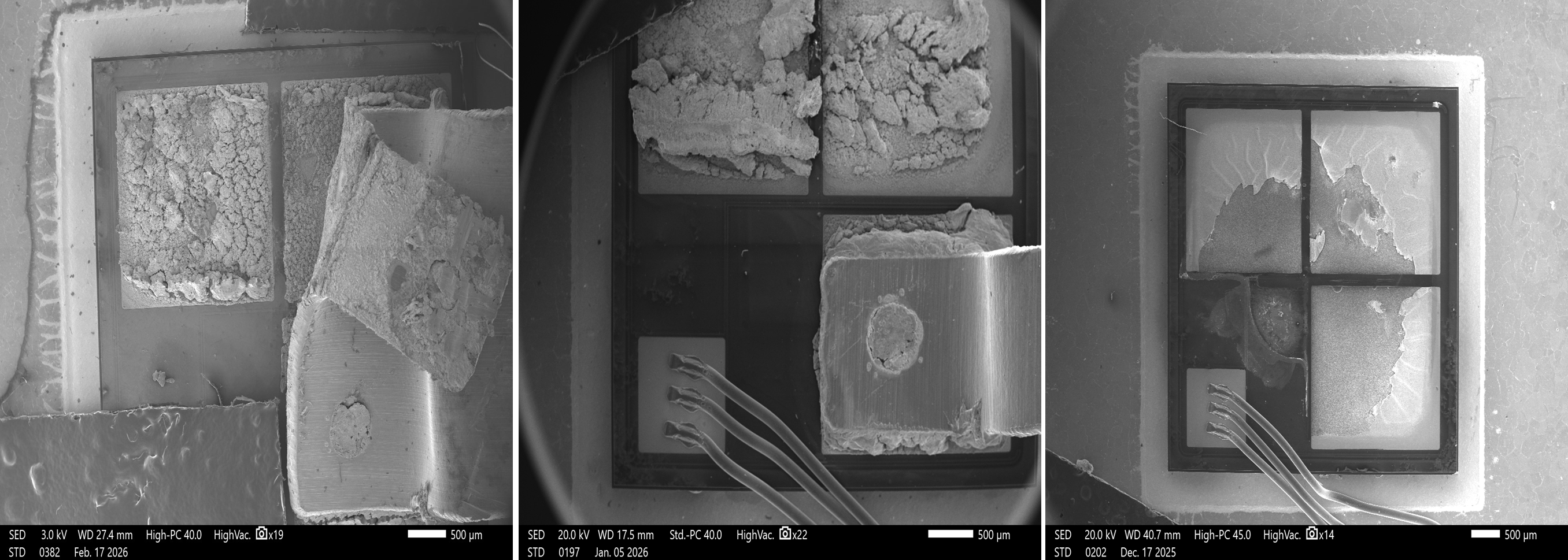
Scanning Electron Microscope analysis after power cycling provided further insight into the failure behavior. For both clip-based technologies, end-of-life analysis showed degradation of the SMT645 solder layer. This degradation was observed after approximately 4,500 cycles for the standard clip and approximately 9,000 cycles for the stress-relief clip.
For the DTS® sample, end-of-life analysis after 100,000 cycles showed delamination of the chip metallization. This indicates a different failure mechanism and supports the conclusion that the DTS® connection concept offers an extremely robust approach under the tested cycling conditions.
In practical terms, the results show that improving die top reliability is not only a matter of adjusting clip geometry. A stress-relief clip can reduce mechanical load and improve lifetime compared with a standard clip. DTS® goes further by changing the interconnection concept and replacing the soldered clip interface with a sintered die top system in combination with flexible bonding wires.
Why DTS® Matters for Future High-Performance Power Electronics
The comparison shows that DTS® achieves significantly higher power cycling lifetime than soldered clip-based solutions while maintaining comparable current carrying capability. This makes the technology particularly relevant for future SiC-based power electronics with higher power density, higher voltage and elevated operating temperatures.
From an engineering perspective, the key advantage lies in combining high current density with improved system-level reliability. DTS® uses a sintered die top structure with copper wire connections, enabling a robust top-side interconnection concept for demanding power module designs.
Higher current density could be achieved by increasing the number of bonding wires or by using thicker clips. However, increasing clip thickness would also increase thermo-mechanical stress and may negatively affect long-term reliability.
As future power modules continue to push thermal and electrical limits, interconnection robustness becomes increasingly important. DTS® addresses this challenge by focusing on the durability of the top-side connection itself.
Outlook: Extending the Comparison
The study provides a solid basis for evaluating the reliability and current carrying capability of DTS® compared with soldered clip solutions. However, a direct comparison between sintered clip designs and DTS® with Cu wire interconnection has not yet been investigated.
To address this gap, a joint project with ECPE (European Center for Power Electronics), led by HAW Kiel, has been initiated. The project will compare sintered and lead-soldered clip concepts with DTS® while also investigating the influence of clip designs and thickness on current capability, thermo-mechanical stress and power cycling reliability.
As power density and operating temperatures continue to increase, interconnection reliability will remain a key factor for achieving longer module lifetime and more robust power electronics.

- copper.jpg)