Thick Film Technology for Heater Applications
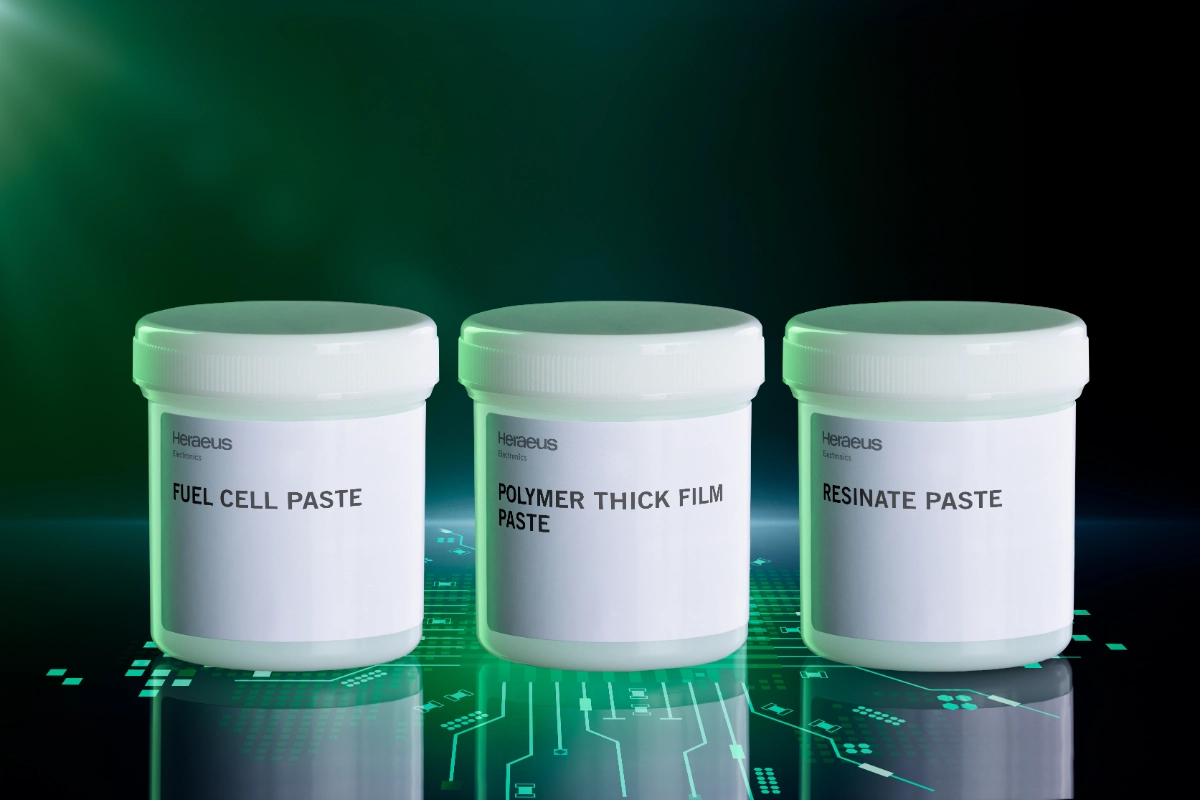
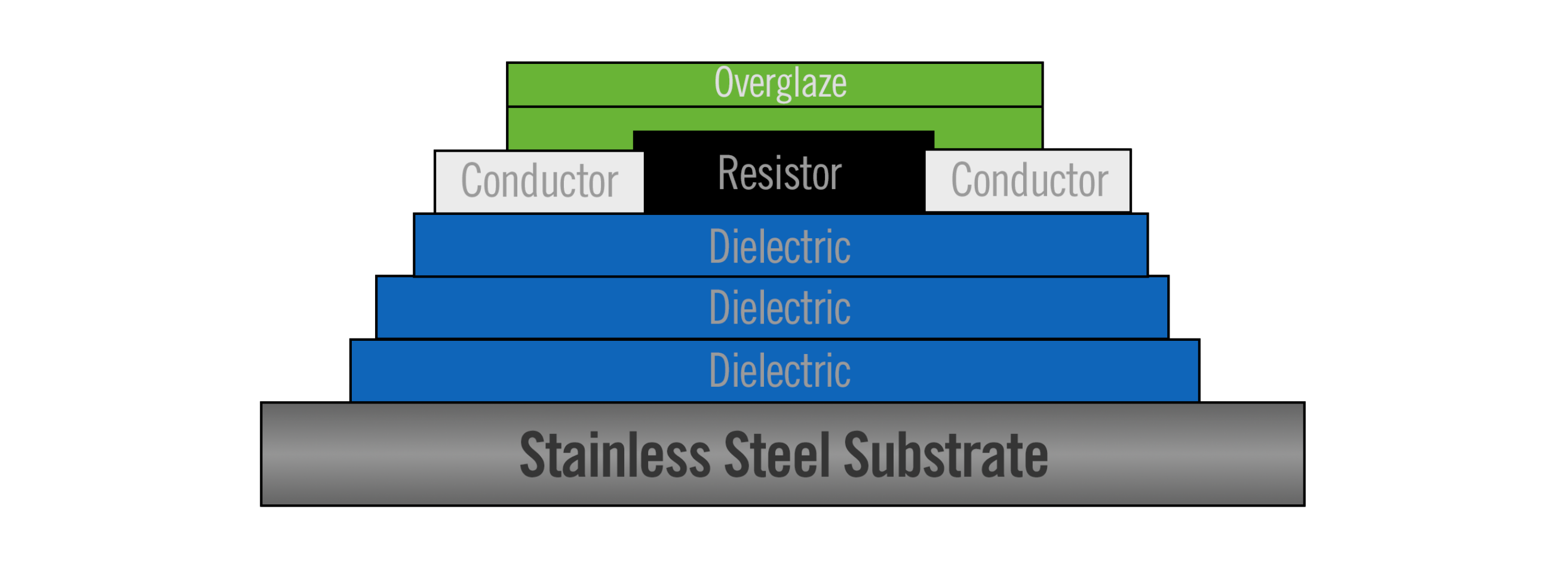
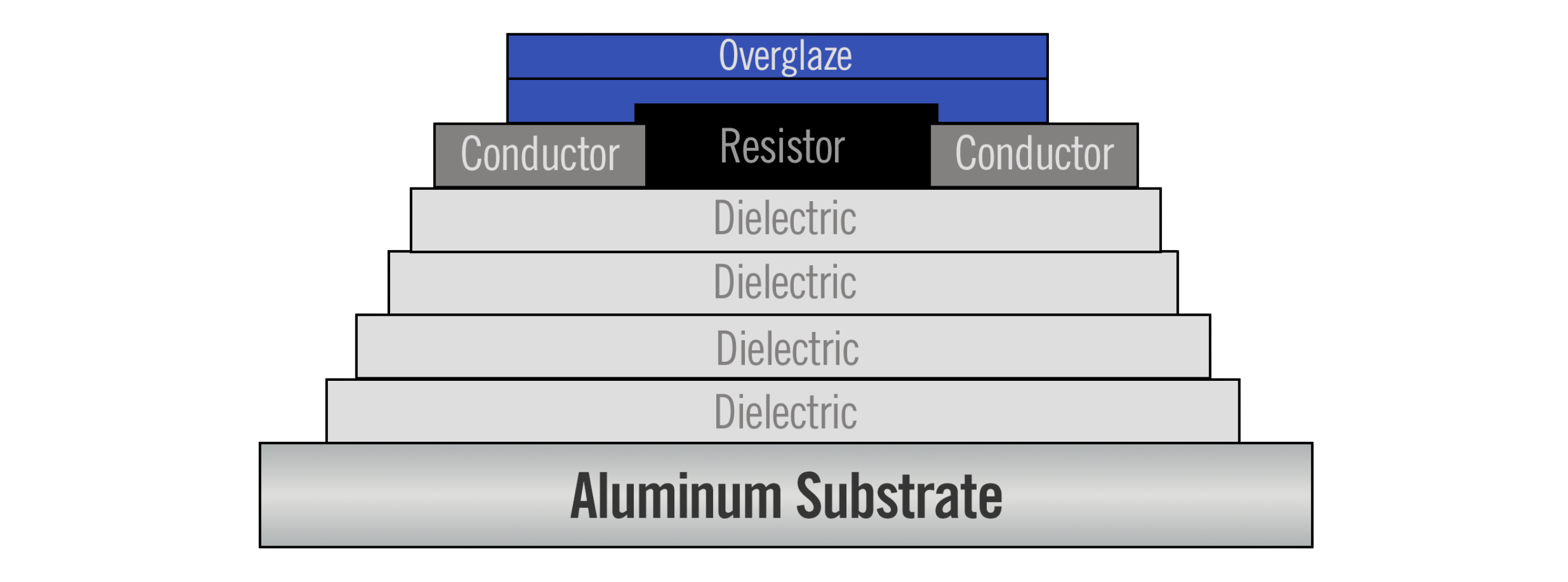
Thick film materials for heater applications are a system of compatible pastes for building a circuit on various substrates with controlled resistances. They are comprised of dielectric, conductor, resistor, and protective overglaze materials and are availabe for most substrate types including steel, aluminum, and ceramic.
Our Heater Technology Roadmap
Heater technology is rapidly evolving, driving the need for thick film materials that deliver higher reliability, stability, and performance. Our advanced paste formulations are engineered to support next‑generation heater designs while enabling more efficient, cost‑effective manufacturing.
We continue to invest in material innovation to help customers achieve tighter tolerances and longer product lifetimes. Our latest development utilizing co-firing technology reduces process steps by 50% or more. Contact us to learn more about our technology roadmap for advancing heater performance and optimizing total cost of ownership.
Heaters on Steel (HoS)
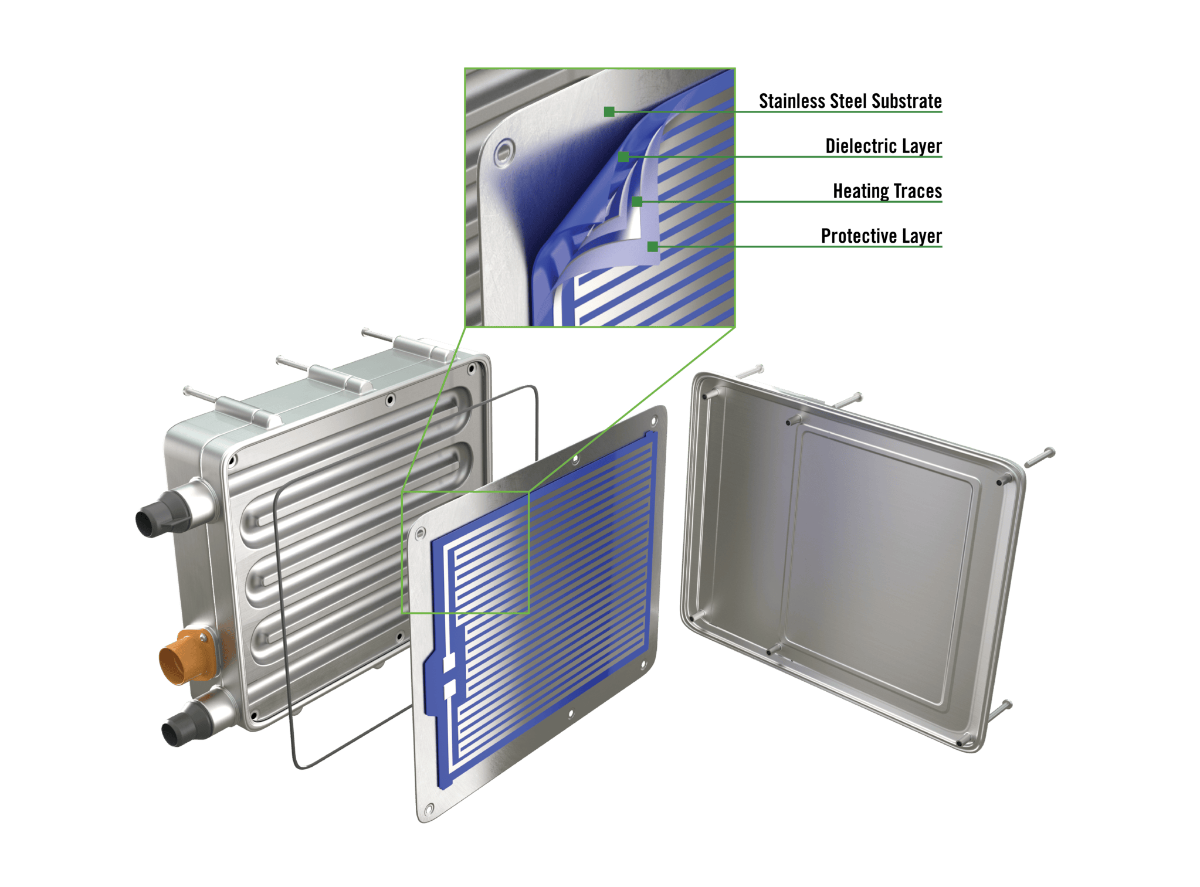
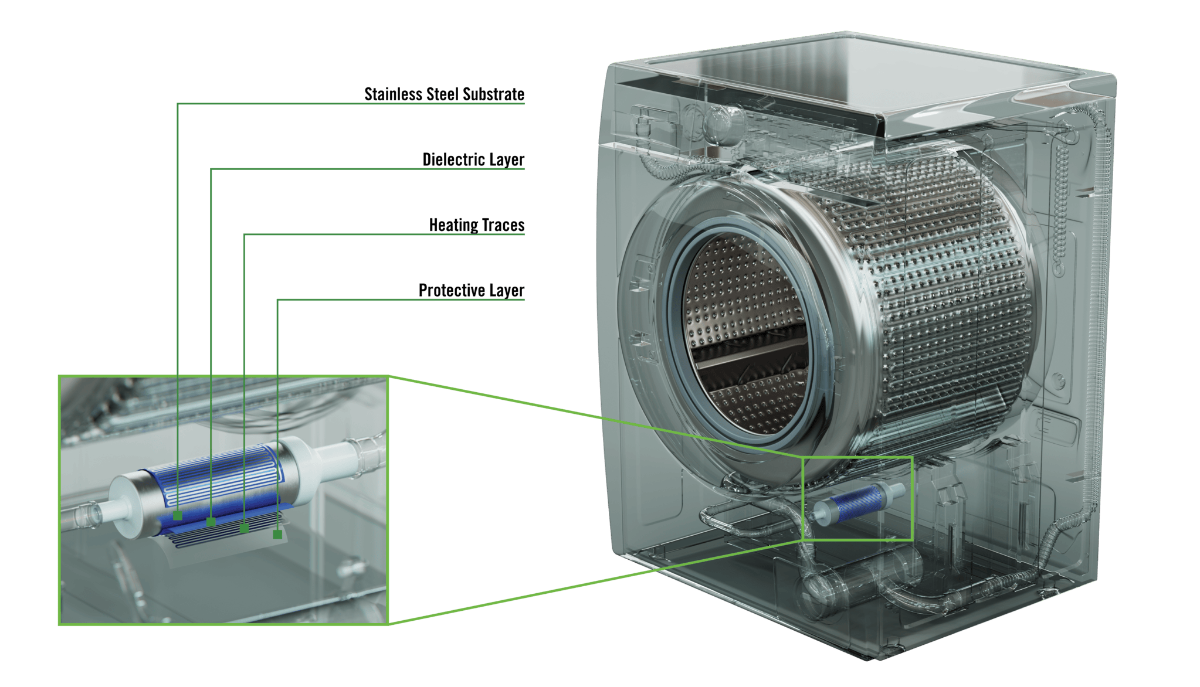
Thick film heaters on steel substrates are widely used in consumer applications such as appliances and water purification and are becoming a dominant technology for high‑voltage heaters (HVCH) in EV battery management and cabin heating. Advantages of using Steel include mechanical strength, resistance to thermal shock, excellent corrosion and oxidation resistance, and reduced material costs, making it ideal for demanding environments.
Thick film technology enables direct processing of circuits on steel, easily scalable production, providing electrical insulation and enabling complex substrate shapes. Heraeus Electronics offers a broad materials portfolio to help optimize reliability and cost across both planar and tubular heater configurations.
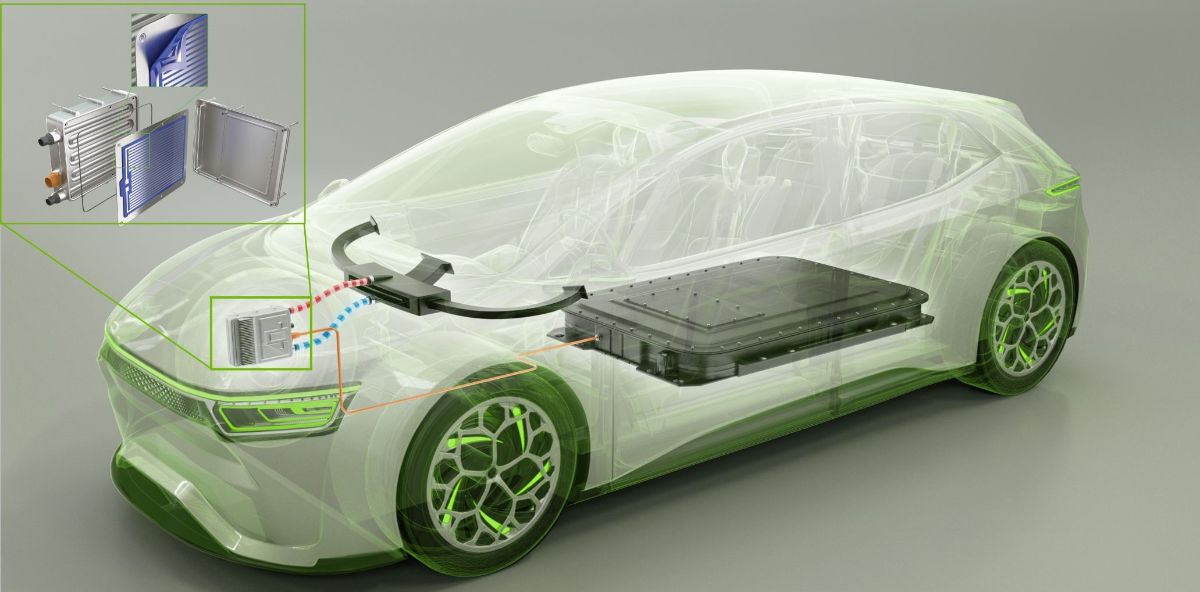
Applications for Heaters on Steel
HoS automotive applications include high voltage coolant heating and cabin heating.
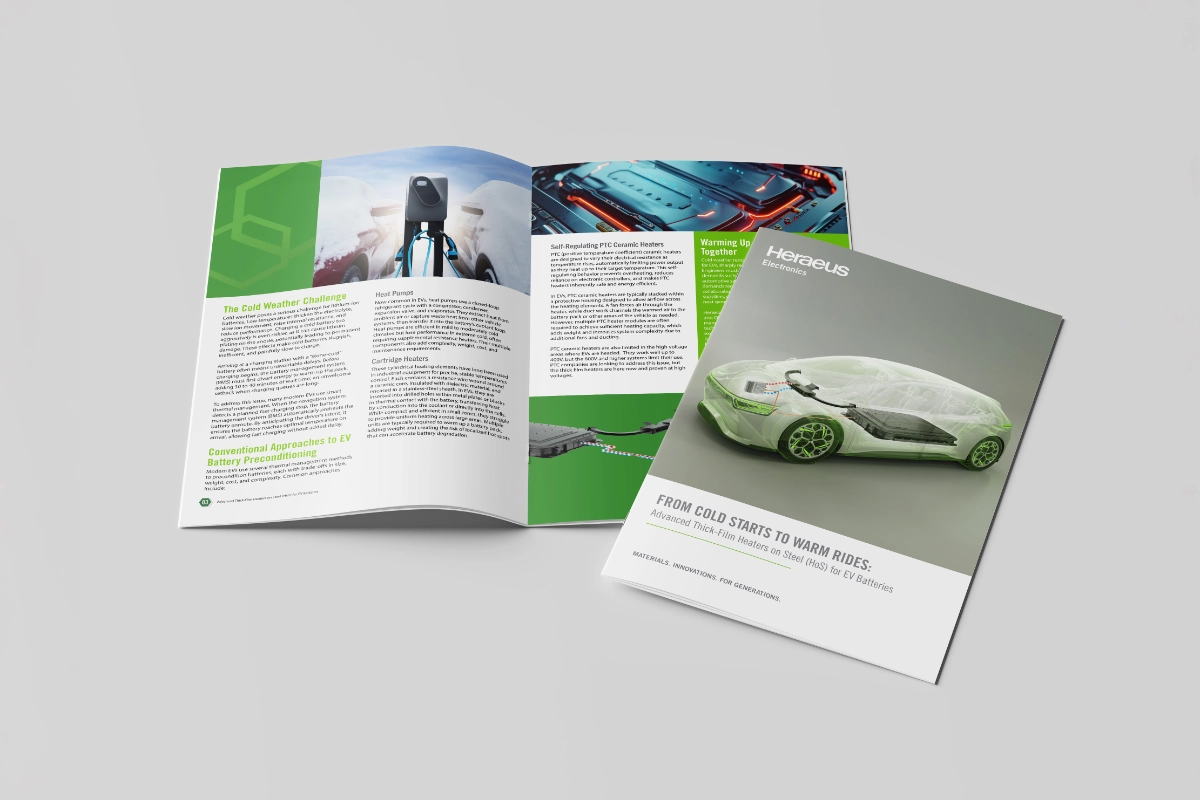
Read our latest whitepaper: From Cold Starts to Warm Rides—Advanced Thick-Film Heaters on Steel for EV Batteries
Explore: HoS Pastes and Processing
Heaters on Aluminum (HoA)
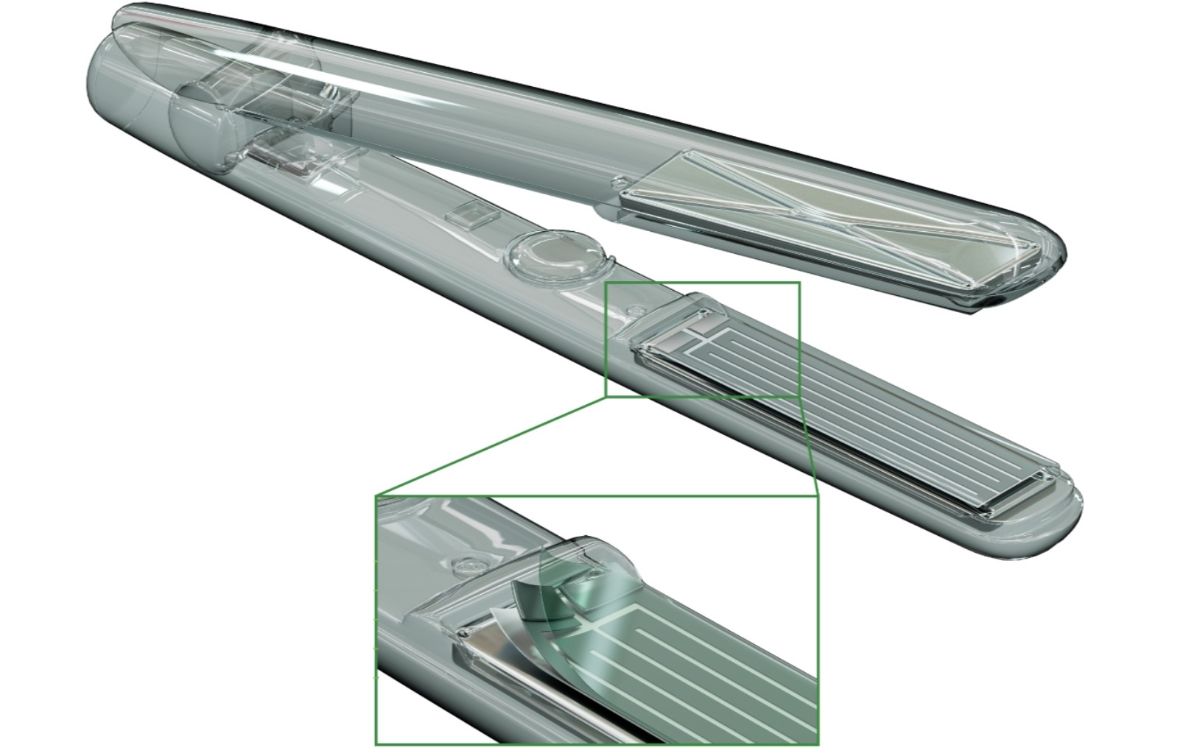
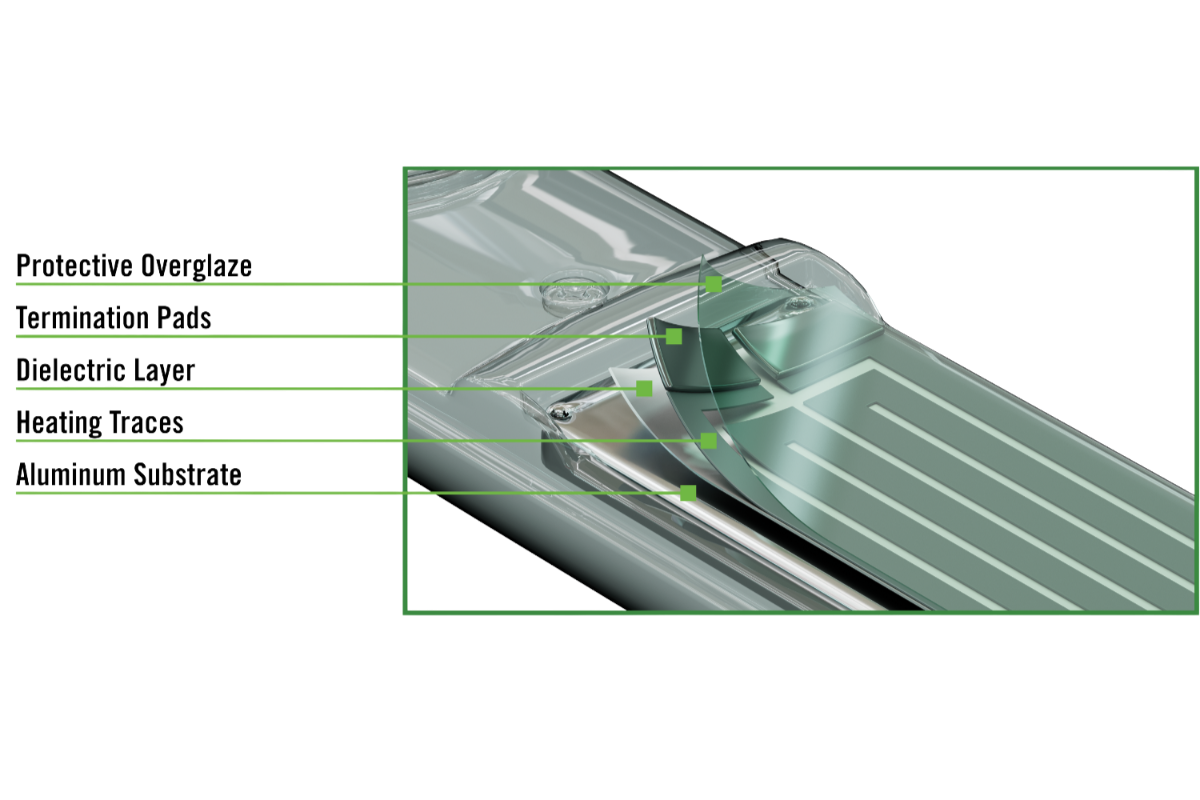
Heaters on aluminum substrates are a newer development, providing higher thermal conductivity at lower mass, which enhances efficiency and thermal transfer. These heaters can be directly built on planar heat sinks, reducing costs and improving performance.
Aluminum's malleability allows for more design possibilities, and its integration with heat sinks eliminates the need for brazing, reducing potential yield loss and field failures. Our unique glass system minimizes bowing on aluminum while providing increased thermal conductivity and high dielectric break down strength.
Applications for Heaters on Aluminum
HoA personal care applications include hair straighteners, curling irons, and more.
.png)
Explore: HoA Pastes and Processing
Heaters on Ceramic (HoC)
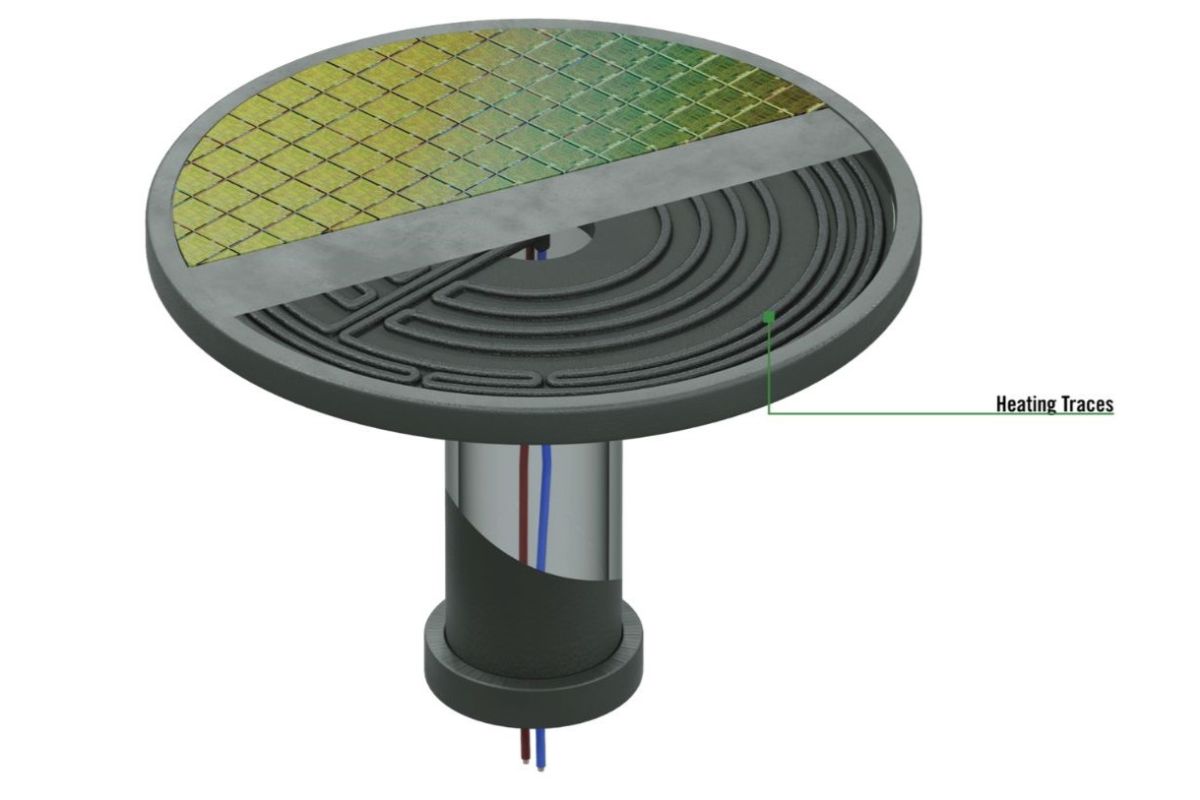
Ceramic substrates, such as alumina and aluminum nitride, are used for heaters due to their high thermal conductivity, high precision, and reliability at high temperatures. These substrates are suitable for a wide range of applications, including consumer, industrial, and automotive sectors.
Ceramic heaters fit well with traditional thick film materials and are being explored for high voltage automotive applications. The use of ceramics provides excellent thermal management and mechanical stability, making them ideal for applications requiring precise temperature control.